
Travel Tips
Packing for Long-Haul Travel Without the Overwhelm
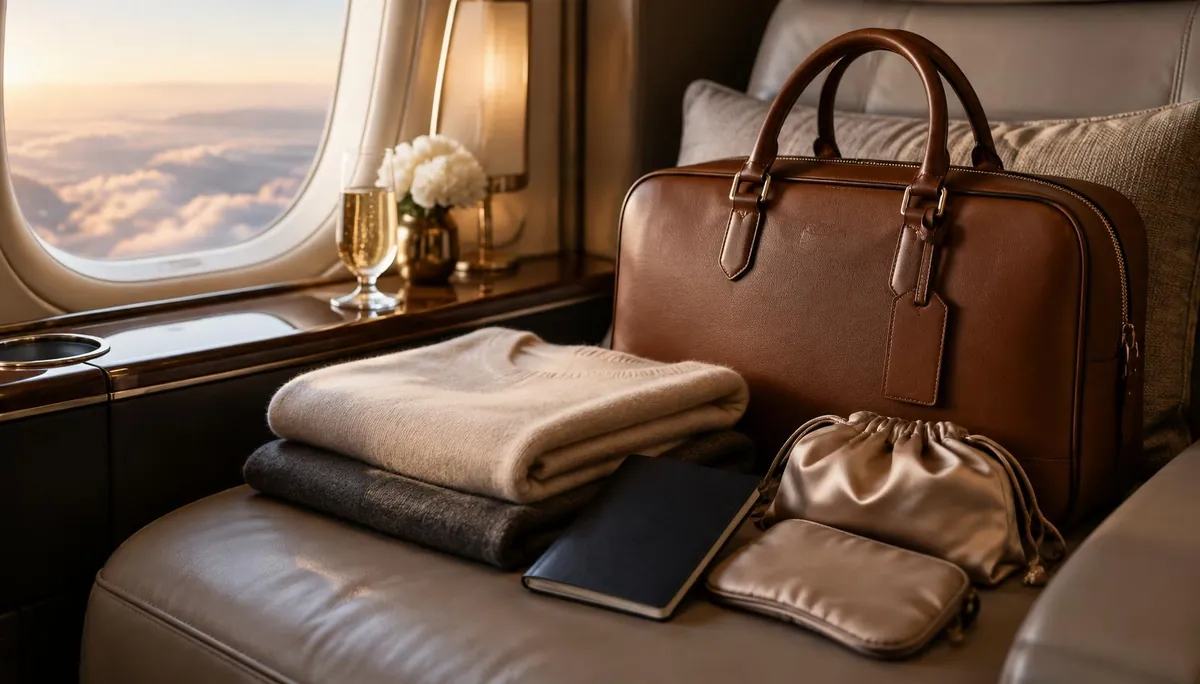
Long-haul travel rewards restraint. The travelers who arrive composed are rarely the ones with the most luggage — they are the ones who packed with intention. Over-packing is not a comfort; it is a burden that follows you through terminals, into car trunks, up narrow hotel stairs, and back home again with half the contents untouched. The goal is not minimalism for its own sake, but rather a wardrobe and kit that support the trip rather than complicate it.
Build a capsule, not a wardrobe
Choose a single colour palette and three fabrics that travel well: fine merino, tightly woven cotton, and a wrinkle-resistant wool blend. Every piece should work with every other piece, so that combinations multiply without volume increasing. A capsule of ten to twelve items comfortably covers a two-week itinerary, including dinner reservations that ask a little more of you.
Start with neutrals — navy, charcoal, cream, olive, or camel — and add one or two accent pieces through a scarf, pocket square, or understated jewellery. Neutral foundations let you move from a morning gallery visit to an afternoon meeting to an evening tasting menu without a complete change of clothes.
Fabric choice matters more than brand. Merino regulates temperature across climates, resists odour, and dries overnight. Cotton breathes in warm destinations and softens with wear. A wool-blend jacket or trousers holds a crease and looks polished after hours in a seat. Avoid linen for multi-stop trips unless you have reliable pressing services at every hotel.
Think in threes: three bottoms, three tops, one mid-layer, one outer layer, and one dressier option. Shoes take the most space, so limit yourself to two pairs — one practical, one refined — and wear the heavier pair on travel days.
- Two pairs of trousers, one tailored and one relaxed
- Three tops that layer under a jacket
- One evening option that folds flat
- Shoes: one walking, one dress — worn or packed flat
- One lightweight merino sweater or cardigan
- A multipurpose scarf for warmth, sun, or modesty
Curate the carry-on
Assume your checked bag will be delayed. Your carry-on should let you begin the trip regardless: a change of clothes, medication in original packaging, chargers, and any documents you cannot replace abroad. The carry-on is not an overflow bag; it is your operational base for the first twenty-four hours.
Pack the heaviest items at the bottom of a wheeled carry-on or closest to your back in a backpack. Use packing cubes to separate categories — one for clothing, one for electronics, one for toiletries — so you can find anything without unpacking the entire bag in an airport lounge.
Toiletries should be travel-sized and leak-proofed. Place liquids in a clear, reusable pouch and double-bag anything pressurised. A small solid cologne or fragrance sample takes less space than a bottle and is less likely to break.
Electronics deserve their own cube: universal adapter, compact power bank, charging cables, and noise-cancelling headphones. Keep a pen and a slim notebook for customs forms, wine labels, or sketches.
- One complete outfit, including underwear and socks
- Prescription medication and a small first-aid kit
- Travel documents, a backup card, and emergency contacts
- A compact power bank and all necessary cables
- Noise-cancelling headphones and an eye mask
- A refillable water bottle, empty until past security
Arrive ready, not recovered
Hydrate before boarding rather than during. Set your watch to the destination time as you take off, and eat on the destination schedule. Small disciplines shorten the adjustment by a full day. The moment you treat the flight as part of the destination, the body begins to cooperate.
Avoid heavy meals and alcohol in the hours before departure. Both disrupt sleep and deepen dehydration at altitude. Instead, eat something light and protein-based, drink water steadily, and move through the cabin every ninety minutes to keep circulation steady.
On arrival, resist the temptation to nap. A short walk in daylight, a shower with a temperature change, and a meal timed to local hours will anchor your rhythm far better than a few hours of interrupted sleep. Save the deep rest for the first local night.
If you cross more than six time zones, consider planning a buffer day with no fixed appointments. This is when the best travel memories are often made — a slow breakfast, a neighbourhood walk, an early dinner — precisely because nothing is scheduled.
The return journey
Pack for the return as carefully as the departure. Leave room for anything acquired: a bottle of wine, a book, a piece of local craft. A foldable tote or duffel kept flat in your luggage is invaluable for overflow.
Before you leave the hotel, photograph the contents of your suitcase. If a bag is lost, the image is the fastest way to document what was inside. Keep dirty laundry separate from clean clothes with a lightweight laundry bag.
Finally, unpack within twenty-four hours of arriving home. It closes the trip properly and ensures nothing is forgotten in a side pocket until the next departure.